


Key Highlights
-
Proper DTF transfer storage prevents fading, glue cracking, curling, and dust buildup that can ruin print quality.
-
The preservation of DTF transfers depends on their storage in flat positions inside cool, dry, dark spaces because these conditions maintain their quality for extended periods.
-
The combination of sealed containers with humidity control systems safeguards adhesives and inks against environmental conditions that lead to adhesion problems.
-
The proper storage methods, together with proper handling techniques,s help to prevent common heat press problems.
-
The combination of organized storage and stock rotation methods enables small apparel brands to achieve professional-quality output.
DTF printing delivers highly durable, long-lasting designs for sports merch, school apparel, holiday gear, and more. However, it may not always produce consistent results if you are not very careful about the storage. Mess it up, and colors fade, glue cracks, and films curl or get dusty. Good storage stops common DTF printing failures and keeps prints looking pro with every press. In fact, understanding how to handle DTF transfers correctly helps prevent these problems before they even start.
So to help you store your transfers right, the following DTF Printing storage tips will keep your prints strong and transfers lasting, extending the shelf life of DTF transfers and preventing waste. So let's get into it!
Why Proper Storage Matters
DTF transfers print on special PET film with sticky powder. When you heat press, the powder melts and sticks to the fabric. For this to work, the glue and ink must be stable. Lack of storage can mean sticky glue, faded ink, and curled films. Learning the best way to store DTF transfers helps you avoid these problems and keeps your production smooth. This also affects how long DTF transfers last in storage, so proper care pays off in quality and longevity.
1. Store Transfers Flat
One simple way to keep DTF transfers good is to store them flat. This stops bending, curling, or cracking, which messes up pressing. Use a shelf, drawer, or flat surface, and place paper between each transfer to prevent sticking. This is one of the easiest ways to store heat transfer techniques for beginners.
Don't roll or fold transfers, since that makes creases hard to remove. Also, let transfers cool before stacking, so they don't warp or stick. Flat storage stops DTF transfer mistakes that happen when people stack too fast. Doing this keeps every print looking good and helps keep DTF transfers dust-free and press-ready.
2. Store Transfers in a Cool, Dry Place
How hot or cold it is matters for custom apparel. If it is too hot, the glue can soften or not work properly. If it is too cold, the glue gets brittle and cracks. The best spot is cool, dry, and away from the sunlight. This is one of the best tips for preserving DTF transfers that guarantees consistent results.
Keep transfers from windows, heaters, vents, or wet walls. If you are in a wet area, add silica gel packs to soak up water. Storing your transfers well is a good way for DTF transfer printing, helping them last. For professional outcomes, follow all DTF transfer handling instructions when moving or pressing transfers.
3. Use Sealed Containers
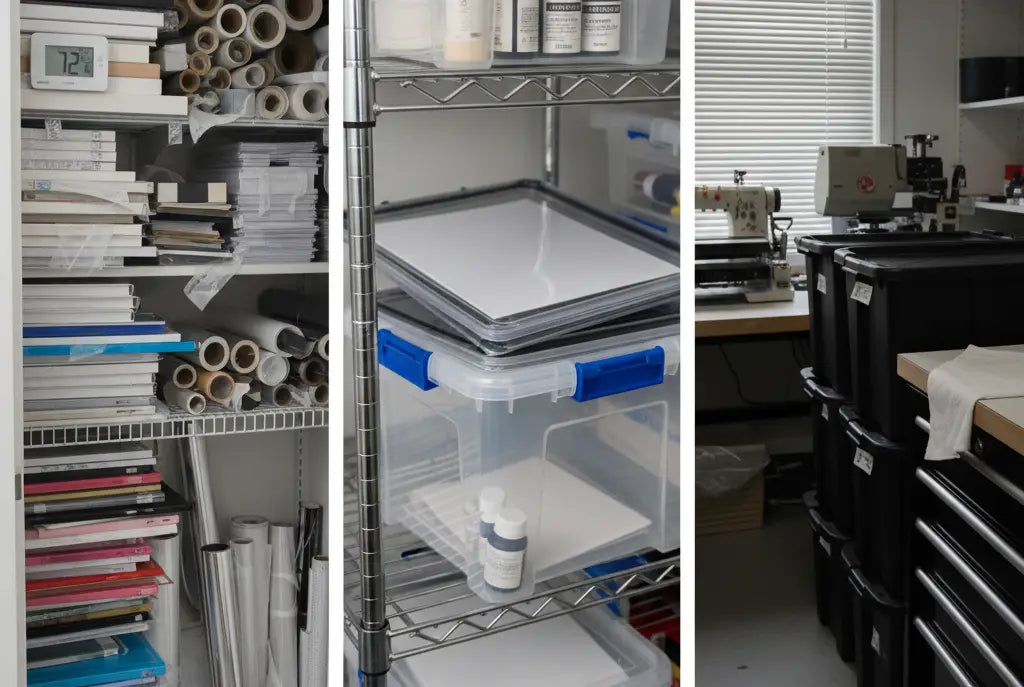
Keeping air, dust, and water away from transfers is key. Small sets should go in plastic bags, and big ones in boxes that seal. Sort by design and tag boxes to find stuff fast. This helps avoid DTF transfer cracking caused by environmental exposure.
Sealed storage stops dust from landing on your films and keeps temp and water levels even. This easy move stops DTF print from not sticking and keeps each transfer ready to press. Maintaining the best temperature to store DTF transfers will ensure adhesion stays consistent over time.
4. Avoid Sunlight
Sunlight and UV can hurt DTF transfers fast, even good ones. Too much sun can fade colors and weaken the glue. Monitoring the proper humidity for DTF transfer storage also helps when light or heat exposure is hard to control.
Keep transfers in dark boxes, drawers, or shelves, and keep them out of bright rooms or near windows. DTF transfers are tough, but keeping them out of the sun stops peeling and keeps prints sharp for months.
5. Handle Transfers Carefully
DTF transfers are for heat pressing, but oil, scratches, or rough handling can still ruin them. Always hold transfers by the edges, and don't touch the print or glue. This small habit shows you follow proper DTF transfer handling in every step.
Gloves keep oil off the glue, and a clean spot keeps transfers smooth. Clean dust with a soft cloth, but no water. Doing this stops heat press failures and stops clumping, curling, or glue issues.
6. Rotate Stock and Check Shelf Life
Knowing how long DTF transfers last in storage is key. Good storage can keep transfers nice for six months to a year. Write the date on your boxes and use older stuff first.
Check your transfers for clumping, curling, or fading. Finding issues early stops wasted stuff and keeps prints looking good. This is part of the DTF printing do's and don'ts that keep things smooth.
7. Maintain Consistent Humidity and Temperature
Changing the temperature and water levels can mess up glue, warp films, and fade colors. Keep a thermometer and hygrometer nearby to watch your storage spot. This also ties into DTF printer maintenance tips, since a stable workspace improves both storage and print quality.
Use a dehumidifier in wet spots or a portable AC in warm spots. A stable setting keeps transfers ready to press and stops DTF transfer failures that newbies miss.
8. Pre-Press Garments and Keep Transfers Clean
Even with good storage, putting it in the right place is key. Pre-press garments to remove water, and keep films clean before pressing. Don't stack warm transfers after curing; let them cool first. This process ensures you know how to get clean results with DTF transfers every time.
These moves, with good storage, give good colors, sharp designs, and strong sticking. Following DTF printing do's and don'ts makes every project look good.
Conclusion
DTF transfers are great for making cool, long-lasting custom apparel, but how you store them is as important as how you print them. Keep your transfers flat, in a cool, dry place, sealed up, and away from sunlight. Treat them gently and use these DTF printing storage tips to avoid sticky, cracked, or curled transfers. Doing this cuts down on mistakes, saves you time, and keeps your prints looking pro.
At DTF Louisville, we create DTF transfers that are designed to stay durable even if you don't use them for a long time. Want to test quality before you order? Check out our FREE DTF sample Pack!
Frequently Asked Questions
Q: What is the best way to store DTF transfers?
Keep them flat, cool, dry, and in the dark. Bag them or use bins with silica gel packs. Storing properly ensures transfers stay sticky, colorful, and peel cleanly for months. This is the best way to store DTF transfers for consistent results.
Q: How to store heat transfers correctly in humid conditions?
Humidity causes the adhesive to clump and the film to soften. Use airtight containers with silica packs, or a small dehumidifier if needed. Dry storage keeps transfers press-ready and prevents humidity-related damage.
Q: Will sunlight mess up my DTF transfers?
Yes. Sunlight or UV rays can fade colors and weaken adhesives. Store transfers in dark containers, drawers, or bins away from bright rooms to maintain vibrancy and adhesion. This is a core tip in tips for preserving DTF transfers for long-term use.
Q: How long can DTF transfers last when stored properly?
When DTF transfers are stored in sealed containers that maintain flat orientation in a cool, dry, dark space, they retain their press-ready condition for 6 to 12 months, as their adhesive strength, color vibrancy, and print quality remain intact.
Q: Should DTF transfers be stored before or after curing?
DTF transfers should always be fully printed and completely cured before storage, as uncured adhesive can clump, stick to other films, or bond unevenly during pressing, causing poor adhesion and inconsistent final print results.
Q: Can temperature changes damage stored DTF transfers?
Yes, repeated temperature fluctuations can weaken adhesion, warp PET film, and dull ink colors over time, resulting in inconsistent press results, poor bonding, and reduced durability of transfers when people use them on garments.
Q: How do I know if my stored transfers are still good to go?
Check before pressing. Look for clumpy adhesive, curling film, or dull colors. If a transfer feels off or doesn’t peel cleanly, it may have degraded. Proper handling prevents these issues and keeps prints professional. This follows DTF transfer handling instructions and ensures top results.
Q: Is it permissible to keep DTF transfers in close proximity to a heat press or printer?
No, transferring storage of heat presses and printers, which operate at high temperatures, creates moisture problems that degrade adhesive properties and shorten material life, which affects the bonding strength of transfers that get stored in sealed containers.
Q: Can I pile DTF transfers on top of each other?
Yes, but put parchment or plain paper between them. Don’t stack too high to avoid bending or creasing. This keeps transfers flat and ready to press while maintaining the shelf life of DTF transfers for months.
Q: What’s the most common error in storage that small apparel brands commit?
The biggest mistake is storing transfers uncovered or in humid spaces, which allows dust and moisture, light, and temperature changes to weaken the adhesive and fade colors and cause curling or cracking before the transfer is ever pressed.
Share:
5 Best-Selling Valentine’s Day DTF Transfers for Colored T-Shirts
6 Things Every Designer Must Know About DTF Transfer File Requirements