


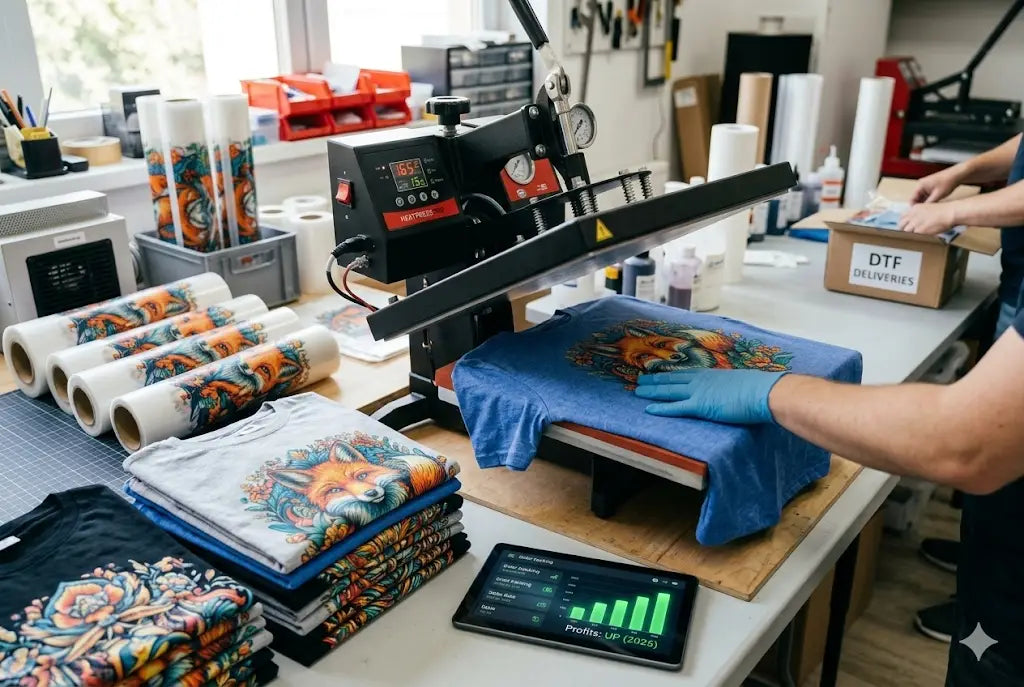
In the past decade, the custom apparel industry has adopted Direct-to-Film DTF printing technology as its main printing method. And for a reason. DTF transfers provide accessible operations for new apparel entrepreneurs through efficient, flexible functions that require minimal initial costs and enable established businesses to keep their profit margins intact.
Personalized product demand from customers across the world has become one of the main reasons that drive its ongoing success. Businesses now need to provide custom apparel solutions to their customers for various purposes, which include brand identity, team connection, event participation, and personal use. This is why DTF continues to thrive.
Below are three main DTF printing profitability factors, and why it is still the best possible solution for apparel printing.
1. Low Startup Costs Compared to Other Printing Methods
The DTF printing business will continue to be profitable during 2026 because its startup expenses remain lower when compared to other methods of apparel design, especially when comparing the overall DTF printing equipment cost. Screen printing requires costly machinery and multiple screens, and requires extensive operational space and the installation of special equipment. The clothing industry establishes entry barriers for small enterprises and emerging business owners through these industry requirements.
The DTF printing system creates an accessible entry point for businesses. A standard DTF setup consists of a printer, film, powder adhesive, and a heat press. The operations require little financial investment, which is easier to manage than establishing a complete screen-printing facility, helping reduce overall DTF printing startup costs.
Additionally, DTF printing enables designers to create their designs without needing extensive design work. Screen printing requires the production of screens and the development of color separations, which demands time and resource allocation. DTF allows designers to print their designs digitally and apply them directly to garments, resulting in lower labor and production costs while improving profit margins.
2. High Versatility Across Fabrics and Products
The primary reason DTF printing remains financially successful for businesses is its ability to print on numerous types of textiles and materials, which directly contributes to the overall DTF printing business profit. Traditional printing methods encounter limitations because they rely on the specific materials used in fabric production. Some methods achieve their highest efficiency when applied to cotton and particular blend fabrics, which creates limitations on what businesses can sell.
The majority of these limitations are eliminated by DTF printing technology, which enables printing on multiple textile materials, including cotton, polyester, tri-blends, performance fabrics, and other types of textiles. The printing technology allows businesses to develop new products without needing to purchase different printing tools, while keeping the cost of DTF printing supplies manageable.
With DTF, Print shops can use their operational flexibility to handle multiple market needs at the same time. Businesses can use a single printing method to create their own custom t-shirts, hoodies, tote bags, uniforms, hats, and other apparel items. Plus, businesses can increase their revenue streams by diversifying their product range, and they can also decrease their reliance on specific market segments as part of an effective DTF printing business model.
3. Efficient Production and Faster Turnaround
The profitability of any apparel printing solution business depends on its ability to deliver products to customers. Customers expect quick delivery times, especially when ordering custom items. DTF printing helps businesses achieve their production goals through its ability to create products quickly while maintaining product excellence as part of a strong DTF printing pricing strategy.
DTF printing enables digital design creation, which allows instant printing without the need for an extensive traditional printing setup. The transfer film becomes ready for application to garments through heat pressing after it receives printing and curing treatment.
Businesses can process additional orders because they complete work faster. The ability to handle more orders results in higher revenue. And therefore, print shops achieve greater success with repeat customers when they can deliver products to customers in shorter timeframes, increasing overall DTF printing startup profit.
Conclusion
DTF printing provides affordable printing solutions that brands can use to create various types of products while maintaining efficient printing operations to meet their business expansion needs. This business model enables all types of companies to create customized apparel products that generate substantial profits and support a scalable DTF printing business plan.
DTF Louisville print services serve as a dependable printing solution for both emerging apparel startups and established printing businesses that need to boost their production capabilities.
Want to get into apparel printing in 2026? Get started with our DTF Sample Pack and DTF Color Chart.
FAQs
1. What makes DTF printing profitable for small businesses?
Small businesses profit from DTF printing because the method requires less money for equipment and uses easier-to-use machines than traditional printing methods. Entrepreneurs can start production without large infrastructure investments while keeping the cost of DTF printing equipment manageable.
2. How long do DTF transfers last on garments?
DTF transfers achieve their intended lifespan when users apply them according to the proper installation procedures. The heat press process enables adhesive powder to create fabric bonds that transform into flexible, durable prints that look good on any type of fabric.
3. Is DTF printing better than screen printing?
The two printing methods, DTF printing and screen printing, create distinct results because they fulfill different printing needs. Screen printing shows its best performance when it handles large volume orders, which contain uncomplicated designs, but DTF printing shows its strengths when used for smaller projects that need intricate artwork, which improves the DTF printing profit margin.
4. Can DTF printing handle complex designs?
Yes. The ability of DTF printing to create intricate designs makes it an ideal printing method for intricate design work. The digital process enables artists to create detailed visual designs that include multiple colors and various graphic details and gradient effects without needing extra equipment.
5. What equipment is required for DTF printing?
The standard DTF printing system needs a DTF printer, transfer film, adhesive powder, curing equipment, and heat press machines. Production facilities for businesses use both automated powder shakers and dryers to achieve their production needs as part of an efficient DTF printing business model.
6. Are DTF prints comfortable to wear?
Yes. DTF prints now use modern technology to create fabric prints that feel soft, flexible, and comfortable for wear. DTF transfers provide a natural fabric movement because they create flexible prints that move together with the fabric, which helps improve DTF printing profitability factors.
7. Is DTF printing profitable for the print-on-demand business in 2026?
Yes. DTF printing can assist print-on-demand enterprises within print-on-demand business operations to create and scale product lines. The technology enables businesses to create products through individual design printing, which requires no extensive setup work.
8. What advantages does DTF printing provide to businesses through their use of gang sheets?
Gang sheets improve profitability by maximizing the available space on transfer film. Multiple graphics can be printed together on one sheet instead of using separate sheets for each design. The process achieves material savings, which result in reduced transfer costs and support a better DTF printing pricing strategy.
9. Does DTF printing work for businesses that need to produce large quantities of products?
Yes. The industry uses DTF printing mainly for small and medium orders, but businesses can execute large production runs when they employ appropriate equipment. Businesses can achieve production expansion through the use of automated powder systems and high-speed printers as part of a scalable DTF printing business plan.
10. Will the future of DTF printing see continued expansion?
Yes, because the demand for custom apparel and personalized products continues to increase worldwide. The DTF printing services will experience business growth for companies that need faster production times combined with expanded design options.
Share:
The One Success Factor Behind Every Successful UV DTF Sticker Business
How to Start a DTF Print Business with Less Than 1K