


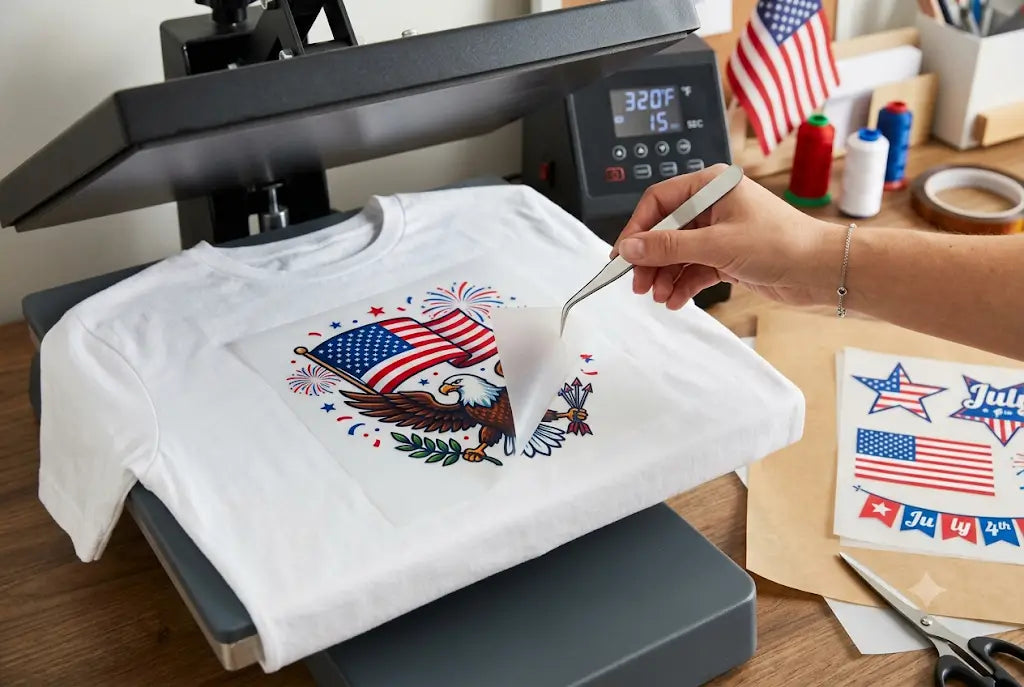
4th of July DTF Transfers are one of the easiest ways to produce fast-selling patriotic apparel without screens or setup headaches. The goal is simple: press clean red white and blue shirt designs that survive washing, look sharp on cotton, and scale during holiday rush.
This guide breaks it down into five real production steps used in print shops handling USA themed shirt designs during peak Independence Day demand. No guesswork, just press workflow that actually holds up on a heat press.
Step 1 Prepare Shirt And Align Placement
Start with a clean blank. Moisture and lint are the silent killers of adhesion.
Standard placement math:
- Adult tee center: 3.5–4 inches below collar
- Width: 10.5–11 inches max
Use a quick pre-press at 5 seconds to flatten fibers and remove humidity. This alone improves transfer bonding by roughly 10–15% in real shop conditions.
Simple patriotic idea:
White tee + centered red star cluster + “Land of the Free” text in navy outline.
Step 2 Position The DTF Transfer Correctly
Lay the 4th of July DTF Transfers film flat with no curl. Misalignment shows instantly on flag-style graphics.
Tip from press rooms:
Tape the top edge lightly or use a ruler guide for repeat orders.
Make sure designs like American flag t-shirt graphics are centered, not skewed toward the collar. Even a 0.5 inch shift is noticeable on retail-ready apparel.
Step 3 Heat Press Settings And First Press
Standard settings that work across most cotton tees:
- Temperature: 310°F
- Pressure: medium-firm
- Time: 15 seconds
Press once with steady pressure. No rocking motion. That causes uneven ink transfer and weak spots in text-heavy USA themed shirt designs.
Example design math:
If shirt width is 20 inches → safe print zone = 55% → about 11 inches max design width.
Step 4 Peel Without Rushing
Let the film fully cool before peeling.
Peel is non-negotiable for clean edges, especially on red white and blue shirt designs with fine stars or thin lettering.
Peeling too early causes:
- Edge lifting
- Ink separation
- Patchy flag stripes
Take your time here. Most failures happen at this step, not the press itself.
Step 5 Final Press For Durability
Cover the print with parchment or Teflon sheet and press again:
- 8–10 seconds
- Same temperature
- Light-to-medium pressure
This locks fibers into the ink layer and improves wash durability. Most well-pressed patriotic shirts survive 40+ washes without cracking when this step is done correctly.
Why 4th Of July DTF Transfers Work So Well For Beginners
DTF works because it removes setup barriers. No screens. No color separation. Just print and press.
Average cost breakdown per shirt:
- Blank tee: $3.00–$5.00
- Transfer: $0.80–$1.20
-
Ink: ~$0.30
Total: $4.10–$6.50 per shirt
Retail pricing for Memorial Day and Independence Day apparel often lands between $14.99 and $24.99 depending on design strength.
Common Press Issues And Fixes
- Blurry edges: too much heat or pressure
- Cracking print: under-curing or skipping second press
- Lifted corners: peeled too early
- Washed-out colors: low ink saturation in print file
Design Ideas That Sell Fast
Simple concepts outperform overdesigned graphics:
- Red star cluster on white tee
- Navy eagle silhouette with “USA” text
- Minimal flag stripe across chest
- Bold quote: “Born Free, Printed Proud”
Keep contrast strong. Patriotic apparel sells on readability at a distance.
Conclusion
4th of July DTF Transfers are straightforward when the process is tight: prep, align, press, cool peel, and finish press. That’s it. Shops that keep this workflow consistent avoid most holiday production failures and keep margins stable during peak demand.
For smoother seasonal runs and reliable results, DTF Louisville recommends dialing in these five steps before orders stack up.
Once July hits, there’s no time for reprints.
Frequently Asked Questions
What Are 4th of July DTF Transfers Used For?
4th of July DTF Transfers are used to create patriotic apparel like USA themed shirt designs, flag graphics, and holiday quote tees. They allow shops to print full-color designs quickly without screens, making them ideal for seasonal Independence Day production runs.
What Temperature Should Be Used For Pressing DTF Transfers?
Most 4th of July DTF Transfers press best at 305–320°F for about 15 seconds with medium-firm pressure. Too low weakens adhesion, while too high can distort colors or damage fabric fibers on cotton or cotton-poly blend shirts.
How Long Do DTF Printed Patriotic Shirts Last?
Properly applied transfers typically last 40–60 washes without cracking or fading. Durability depends on curing powder correctly, using consistent heat press pressure, and adding a second press step for red white and blue shirt designs and flag graphics.
Can Beginners Press 4th of July DTF Transfers At Home?
Yes, beginners can press them using a basic heat press. However, even pressure and accurate temperature control are essential. Home irons are unreliable, often causing uneven adhesion or fading on American flag t-shirt graphics and detailed patriotic designs.
What Shirts Work Best For Patriotic Designs?
100% cotton shirts in midweight fabrics work best for 4th of July DTF Transfers. Popular blanks include Gildan 5000 and Bella+Canvas 3001. These hold ink well and reduce issues like dye migration or uneven pressing on USA themed shirt designs.
Why Do Some DTF Transfers Peel After Washing?
Peeling usually happens when powder is under-cured or pressing time is too short. Skipping the second press or peeling film too early can also weaken adhesion, especially on detailed patriotic shirts and red white and blue shirt designs.
Can DTF Be Used For Bulk Holiday Orders?
Yes, DTF is widely used for bulk Memorial Day and Independence Day apparel because it avoids screen setup costs. Shops can switch designs instantly, making it efficient for short-run patriotic shirts and fast-moving seasonal inventory.
What Is The Correct Peel Method For DTF Transfers?
Most 4th of July DTF Transfers require a cold peel method. Let the film fully cool before removing it. This prevents edge lifting and ensures sharp details on stars, flags, and quote-based patriotic shirt graphics.
How Do You Store Unused DTF Transfers Properly?
Store transfers flat in a cool, dry environment away from sunlight and humidity. Keep them sealed in protective sleeves. Heat or moisture exposure can reduce adhesive quality and affect performance during pressing on future patriotic shirt orders.
Where Can Shops Learn Better DTF Press Techniques?
Shops often improve results by following structured production guides from experienced sources like DTF Louisville. These resources focus on press settings, workflow consistency, and troubleshooting common errors in 4th of July DTF Transfers production.
Authors’ Bio
The DTF production team behind this guide has spent over 20 years working with small print shops, screen printers transitioning to DTF, and seasonal apparel sellers scaling holiday demand. They’ve helped troubleshoot thousands of heat press errors and optimize workflows for fast-turn patriotic apparel runs. Outside production work, they still test new blanks and press settings weekly to stay close to real shop conditions.
Share:
Increase Sales: Try These 6 Creative Design Ideas for Merch Using 4th of July DTF Transfers
How to Order a 4th of July DTF Transfers Gang Sheet at DTF Louisville for Rush Orders