


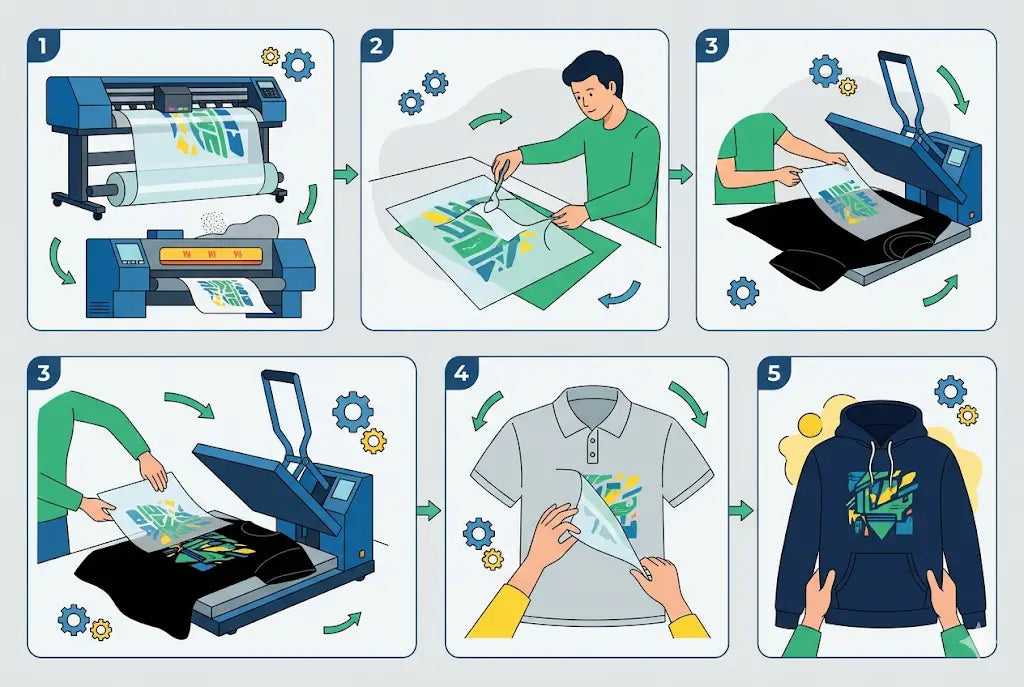
The UV DTF printing market has been revolutionized by Thermoplastic polyurethane (TPU) in recent years. TPU provides flexible material properties which enable it to be used on multiple surfaces including curved objects and wearable products and items that people will touch continuously. The increasing need for customized products in multiple industries which include apparel and promotional merchandise creates new business opportunities through TPU UV DTF printing.
However, achieving optimal results requires more than simply adding TPU into your workflow. Understanding the correct materials, layering process, curing methods, and transfer techniques is essential.
This blog breaks down the process into five simple, actionable steps. Whether you're new or refining your technique, this guide will help you create high-quality 3d UV DTF transfers.
Step 1: Choose the Right TPU Film and Materials
Choosing the appropriate TPU film is crucial in ensuring that you get effective results. UV DTF TPU films vary depending on flexibility, thickness, and UV ink compatibility; therefore, always ensure you use TPU films designed for the UV DTF process. The TPU film should be used in combination with an A/B film system in order to get better adhesion. UV inks, which do not harden but remain flexible after the UV curing process, are also essential. Using appropriate materials from the very beginning improves performance and ensures better print results.
Step 2: Prepare Your Design and Printing Setup
Good planning for designing and setting up printing makes a big difference in terms of print quality. Be sure to always work with high resolution artworks that should be ideally 300 DPI to have clear prints. Make proper selection of colors as per the compatibility of your UV printer. Change your printer settings based on TPU specifications and flexibility issues. Be sure to clean your working place as dust will cause problems with the bonding process. Proper alignment of films on your printer table is a must for avoiding any type of misprint problem.
Step 3: Print and Apply TPU Layers Correctly
The best printing results require you to follow proper layering techniques during the printing process. The first step (in printing) involves printing the color layer, then printing a layer of white ink for opacity purposes, and finally putting on a varnish or an adhesive layer. The proper ink application requires monitoring because excessive ink will reduce design flexibility while insufficient ink will destroy the adhesive bond. The TPU-friendly adhesive layer needs to be applied in a consistent manner throughout the entire surface.
Step 4: Cure and Laminate for Durability
TPU printing requires careful handling because it needs special treatment to maintain its printing flexibility and toughness. The TPU print requires UV lamp curing through its proper intensity range because both over-curing and under-curing will damage the print. Film A needs to be laminated with Film B after the curing process because this method ensures proper adhesive distribution across the complete design. The laminating process requires continuous pressure application because this method prevents both wrinkling and air bubble formation during the bonding process.
Step 5: Transfer and Finish the Application
The transfer process brings your TPU UV DTF print to life on the final surface. Please peel Film A in a careful manner because it will keep the design intact on Film B and you need to apply it on your target surface. Use a squeegee or roller to apply strong and consistent pressure which will help the material stick while you remove all air bubbles.
Conclusion
The combination of flexible DTF printing material like TPU and UV DTF printing can help you create flexible and durable custom designs with high-quality results. However, achieving the professional results depends on your choice of materials, your execution of setup procedures, your control of layering, and your management of curing processes. The achievement of visual attractiveness and permanent performance depends on the execution of every individual step. By following the five-step process, you can ensure quality prints without any extra labor.
Start with UV printing today: try our UV DTF sample pack with our UV DTF Gang Sheet Builder to start testing.
FAQs
1. What is TPU in UV DTF printing?
Thermoplastic polyurethane TPU functions as a flexible material which improves durability and elastic properties for ultraviolet direct-to-film printing. The material allows for printed designs to stretch freely without creating any cracking, which makes it suitable for use on surfaces that require bending or movement.
2. Can TPU be used on all surfaces?
Yes. TPU UV DTF prints can be applied to a wide range of surfaces, including glass, plastic, metal, and some flexible materials. Proper surface preparation is necessary to achieve proper adhesion between materials. TPU works effectively on curved and irregular surfaces but needs extra treatment for extremely rough and porous materials.
3. Do I need special ink for UV DTF for fabric printing?
The use of flexible UV inks becomes mandatory for TPU work because this material requires their application. The application of standard rigid UV inks to flexible surfaces leads to cracking, which results in decreased durability. TPU-compatible inks maintain elasticity after curing, which allows the design to withstand stress without damage.
4. How can I avoid cracks in my TPU prints?
To avoid cracks in your prints, you need to make sure that you are using flexible UV inks and do not over-cure them when printing. Balancing your ink layers is essential because thicker layers will result in less flexibility in your prints. It is necessary to apply the right pressure when transferring and work only with compatible materials.
5. Why is A/B film needed for textured sticker printing?
The A/B film is very important in UV DTF printing. Film A is used to print the design, and Film B holds the adhesive layer. After printing and curing the print, you need to laminate the films to get the design ready for transferring. This way, you will have an evenly distributed adhesive layer, which will simplify the transfer process and produce great prints without any additional equipment.
6. Are TPU UV DTF prints washable?
Yes, TPU UV DTF prints are typically resistant to washing and cleaning. However, you should not use aggressive methods to wash them because it may decrease their life span.
7. Does laminating become a requirement for TPU UV DTF printing?
It is important to laminate when you print TPU UV DTF because this step will enable the adhesive layer to be uniformly placed on the design. Without laminating properly, there are chances that the print might not adhere to the surface as required.
8. What should be the required temperature for TPU transfer?
In most cases, it is not important to have high temperatures when transferring designs using TPU UV DTF technology. Heat may actually play a secondary role since the main factor to consider is pressure. However, in some cases, warmth can be helpful depending on the surfaces involved in the process.
9. How durable are the prints made through TPU UV DTF technology?
UV DTF flexibility allows products to be super durable and perfect for regular, everyday use. The technology allows you to create items that are less likely to crack or peel off over time. This quality makes these items useful for various applications including decoration and functionality.
10. Is TPU UV DTF appropriate for novices?
TPU UV DTF printing is an option that could be considered suitable for novices provided they adhere to a systematic approach. Although it may entail a few processes, becoming familiar with the right procedures will make the process easy. Novices only need to begin with the right material and settings before mastering the transfer process.
Share:
A Quick Guide to DTF Transfers and DTF Printing for Apparel Brands
3 Benefits of Bulk UV DTF Gang Sheets for Louisville Print Shops