


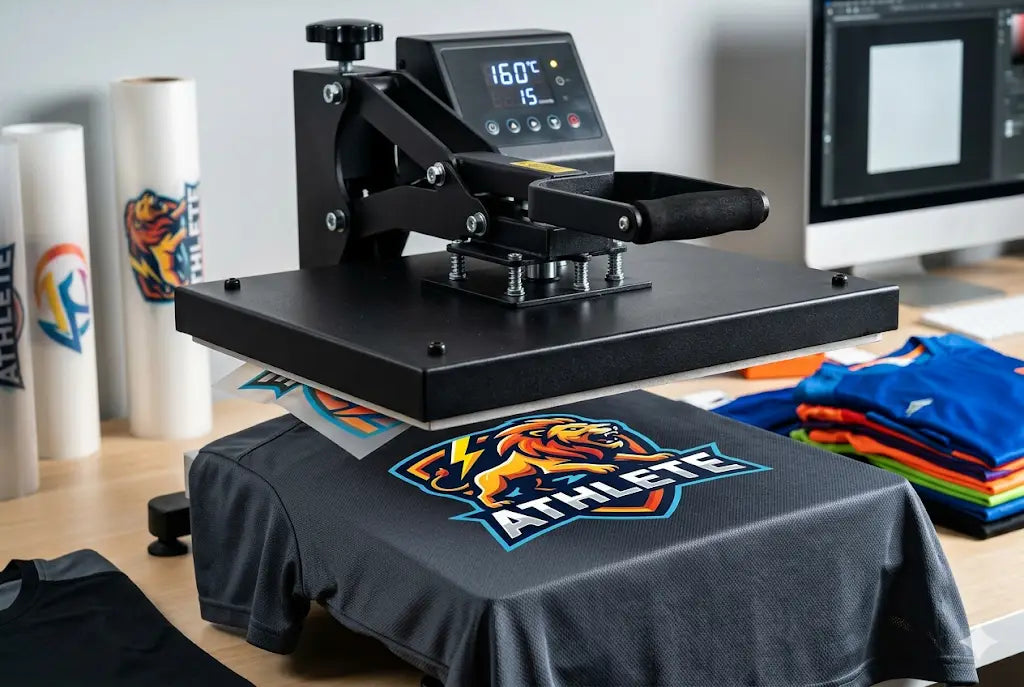
Are you a sports apparel manufacturer in Louisville? Would you like to start using DTF as your primary product method? If so, this post is for you.
DTF transfers provide brands with the ability to print designs on polyester materials, blended fabrics, and performance fabrics, which traditional printing methods cannot achieve. However, premium quality requires the proper execution of the best heat press settings for DTF transfers. Without proper settings, you can waste material, increase your overall costs, and face frustration throughout the process.
The process of producing long-lasting and visually appealing prints requires knowledge about how to modify temperature, pressure, and pressing duration for different athletic fabrics. Plus, in order to print on jerseys, gym wear, and team uniforms you need to master these settings. So in this DTF transfers heat press guide, we’ll help you learn how to heat-press DTF transfers effectively using the right heat press settings.
Understanding DTF Transfers and Sports Fabrics
Let’s start with the fabrics first!
DTF is particularly effective for sports apparel because it adheres well to synthetic fibers like polyester, nylon, and blends commonly used in athletic wear. Sports fabrics are engineered for performance, which results in lightweight designs that provide breathability and stretchable capabilities.
These features, while beneficial for athletes, can complicate the heat transfer process. Polyester material develops dye migration problems at high temperatures because the heat causes colors to bleed into the transfer. Spandex blends need special treatment to preserve their elastic properties and prevent shape changes, requiring proper DTF transfer heat press settings.
With lower temperatures, controlled pressure, and precise timing, the fabric can maintain its original structure while the transfer process achieves successful bonding.
Ideal Temperature Settings for Sports Apparel
The optimal heat press temperature for most sports apparel lies between 130°C and 150°C (266°F to 302°F) according to industry standards, aligning with DTF heat press temperature time recommendations. The lower temperature range provides optimal results for polyester and performance fabrics because it prevents both scorching and dye migration from occurring.
Some people believe that higher temperatures help create stronger bonds, but these temperatures actually harm synthetic fibers and produce undesired changes in color. Dark-colored jerseys lose their dye when they suffer from excessive heat exposure because this makes them more susceptible to dye bleeding. The adhesive reaches its proper melting point at a moderate temperature, which allows the adhesive to function as intended while preserving the garment's integrity.
The specific type of DTF film used in the process requires evaluation. Some films are designed to operate at low temperatures, which makes them suitable for use in sportswear. Always check the manufacturer’s guidelines and test on a sample fabric before full production, using a proper heat press temperature guide for DTF.
Pressure and Time Settings for Performance Fabrics
The final quality of a DTF transfer depends on the combined effects of pressure and pressing time, together with temperature. The standard pressure for athletic clothing requires designers to use medium pressure. Excessive pressure will cause fabric to lose its original texture while damaging elastic materials, and insufficient pressure will prevent proper bonding.
The ideal pressing time typically falls between 10 and 15 seconds. This duration allows the adhesive to bond effectively without overexposing the fabric to heat. Pressing times should be limited to shorter durations because they help protect delicate fabrics such as lightweight polyester and mesh jerseys from distortion, making heat press time for DTF transfers a key factor.
Additionally, pressure application requires proper consistency to achieve successful results. The design will lose parts after washing when designers apply pressure inconsistently. The heat press equipment should have pressure control features to apply pressure evenly across all sections of the garment.
Conclusion
Mastering the best heat press settings for DTF transfers on sports apparel is essential for producing high-quality, durable prints. The combination of temperature, pressure, and time adjustments help you produce excellent results on various athletic fabrics. The proper implementation of pre-pressing techniques together with proper peeling and finishing presses results in sportswear products that maintain their durability throughout extended use while avoiding DTF transfer peeling issues.
Start testing DTF transfers on sports apparel with our free DTF Sample Pack and save money with our Gang Sheet Builder.
FAQs
1. What temperature is needed for DTF transfers on polyester sports apparel?
The ideal temperature for polyester sportswear is typically between 130°C and 150°C. This range helps prevent dye migration and fabric damage while ensuring proper adhesion of the transfer using DTF heat press temperature and time guidelines.
2. What pressure should I apply when working with athletic materials?
Athletic fabrics require medium pressure according to common practice. This level ensures the adhesive bonds properly without damaging the fabric’s structure or elasticity Excessive pressure causes material flattening, whereas insufficient pressure leads to a weak connection.
3. What is the recommended duration for pressing DTF transfers?
The recommended pressing time for DTF transfers on sports apparel is between 10 and 15 seconds. This duration allows the adhesive to activate and bond effectively without overheating the fabric, making heat press time for DTF transfers critical for quality results.
4. Should I pre-press sports apparel before applying transfers?
Yes. The process of pre-pressing sports apparel before transferring designs to the fabric is absolutely crucial. The process eliminates all moisture and wrinkles, which leads to the creation of a perfect surface for the transfer process and supports proper heat press DTF transfer techniques.
5. What is the best peeling technique for sportswear?
Peeling should be done as per the peel type and manufacturer’s guidelines. The correct peel method will enable complete adhesive development through film removal. If done right, the process will create solid bonds that withstand tough usage and help avoid DTF transfer peeling issues.
6. Do DTF transfers work on stretchy fabrics?
The DTF transfer process functions effectively with stretchy spandex fabric combinations. The correct application method enables the design to stretch together with the garment while preventing any cracks or peels when using proper DTF transfer pressure settings.
7. What methods stop dye from migrating through polyester fabric?
Dye migration happens because of high temperatures and extended pressing times, which need to be avoided for successful prevention. The use of premium transfers and a proper heat press temperature guide for DTF decreases the chances of color bleeding.
8. Do I need a second press after applying DTF transfers?
Yes. A second press is highly recommended as it improves adhesion and enhances the finish of the design. This step ensures durability and gives the print a professional look.
9. Can I use the same settings for all sports fabrics?
The same settings cannot be used for all sports fabrics because their requirements differ. Adjusting your approach for each material ensures better results and helps you get a premium look on every fabric type so choose your settings based on fabric type.
10. What are the most common mistakes in DTF printing on sportswear?
People make common errors by applying too much heat, using incorrect pressure, failing to pre-press, and selecting inappropriate peeling techniques. These errors can be avoided by following the above DTF transfer heat press settings.
Share:
3 Benefits of Bulk UV DTF Gang Sheets for Louisville Print Shops
Hyper+ vs UV DTF Printing: What Louisville Print Shops Should Pick